Skip to content

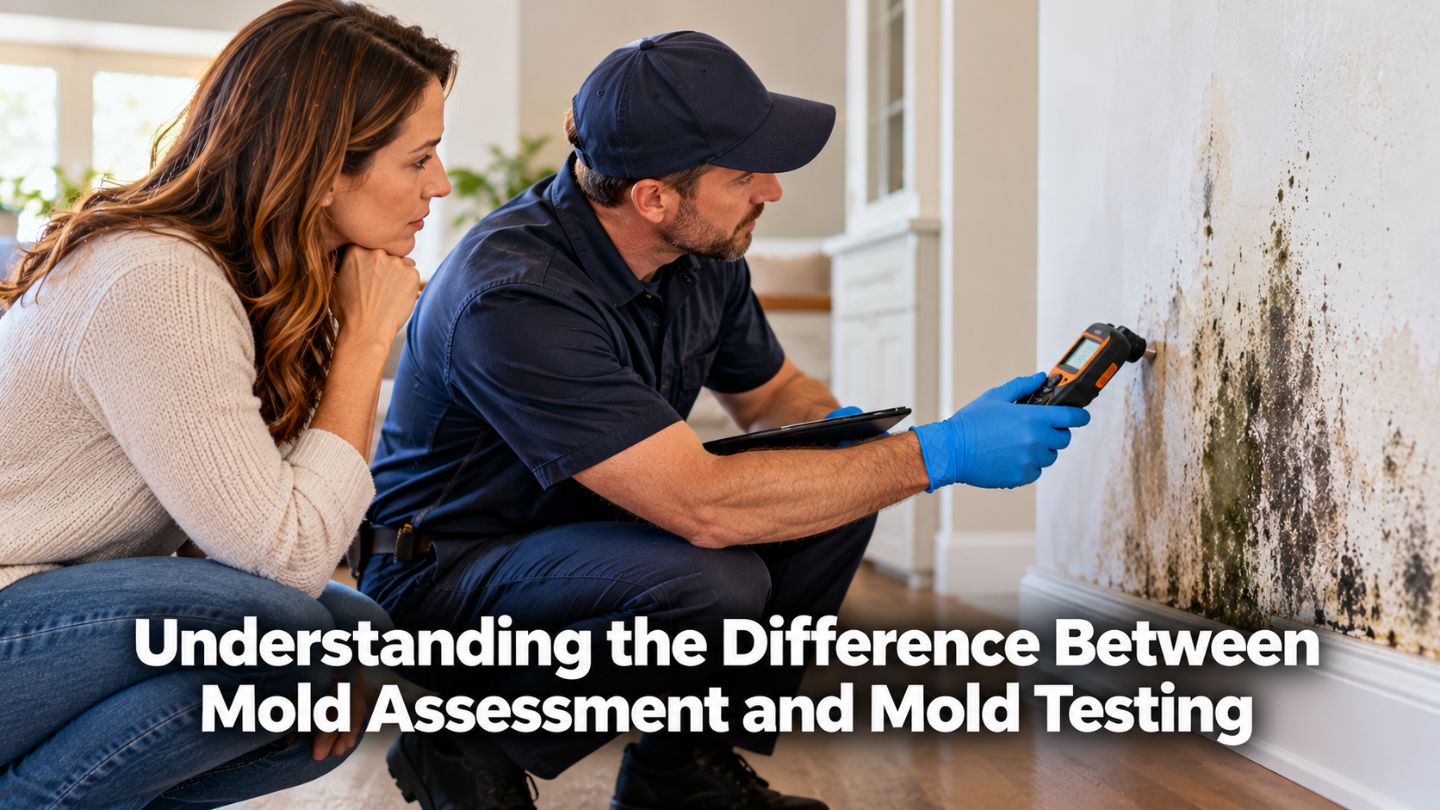
You notice a musty smell drifting up from the crawlspace, or maybe dark spots have appeared along the bathroom ceiling after weeks of Georgia summer humidity. Your first instinct is to search for help – but should you ask for a mold assessment, mold testing, or both? Understanding the difference between mold assessment and mold testing is the single most important step before you spend a dollar on solving a mold problem. These two services answer fundamentally different questions, and knowing which one you need first can save you time, money, and unnecessary worry.
A mold assessment is a comprehensive investigation of your home – its moisture sources, building history, ventilation, and structural vulnerabilities – designed to find where mold is growing and why. Mold testing, on the other hand, involves collecting samples (air, surface, or bulk) and sending them to a laboratory to identify mold species and spore counts. Many homeowners assume these are the same job, but they are not. Each plays a distinct role, and a strong assessment almost always comes first.
This blog breaks down what each service involves, when each is most useful, how professionals use them together, and what you should ask before scheduling either one.
Key Takeaways
- A mold assessment examines the entire home to locate moisture sources, identify visible mold growth, and build a remediation plan – it answers why mold is present and how serious it is.
- Mold testing collects physical samples for laboratory analysis to determine mold species and spore counts – it adds detail but does not find every moisture source on its own.
- Assessment is usually the first and most important step, especially when there is visible mold or a damp crawlspace.
- Testing becomes most valuable when there is no visible mold, when documentation is needed for insurance, or after remediation to confirm conditions have improved.
- Understanding the difference helps property owners in Georgia ask for the right service and avoid unnecessary steps.
What Is Mold Assessment?
A mold assessment is a full investigation of your home’s conditions, carried out by a trained professional who looks beyond the obvious to find where moisture is entering and where mold may be hiding. The primary purpose is not just to identify visible mold but to understand the underlying moisture issues – leaks, condensation, poor ventilation, water damage – that allow mold growth in the first place. Mold is a symptom of underlying moisture issues that need correction, and assessment is how those root causes come to light.
A proper moisture assessment considers the building history of your home: prior leaks, roof or plumbing failures, past flooding, and even the age and condition of building materials like drywall, insulation, and wood framing. In Georgia, where high humidity and warm temperatures create ideal conditions for mold contamination, professionals pay special attention to crawlspaces, attics, bathrooms, areas around plumbing, and HVAC systems. Mold inspections typically use moisture meters and thermal imaging to detect hidden dampness behind walls and under floors.
The main outcome of a mold assessment is a clear picture of what needs to be remediated and where the moisture is coming from. A mold assessment provides a remediation protocol detailing repair steps – not just a list of problems, but a plan of action tailored to the specific home and budget. This is what separates a thorough assessment from a quick visual glance.
What a Professional Mold Assessment Typically Includes
When you schedule a professional mold assessment, here is what you can generally expect:
- A complete walkthrough of interior rooms, with close attention to areas prone to mold problems – bathrooms, kitchens, laundry rooms, and any spaces with past water damage.
- A detailed look at the attic and crawlspace, checking for signs of moisture intrusion, fallen insulation, water stains, and visible mold growth on joists or subflooring.
- Evaluation of humidity and ventilation patterns, especially in closed-off areas where air circulation is poor and moisture tends to accumulate.
- Moisture mapping using professional-grade moisture meters and, in many cases, infrared cameras to detect temperature anomalies suggesting hidden leaks or wet materials behind surfaces.
- Documentation of inspection findings with detailed notes and photographs, explained to the homeowner in plain language rather than technical jargon.
- A proposed remediation plan that outlines which affected areas need attention, what moisture sources must be corrected, and how the work will be prioritized.
The ASTM D7338-14 framework guides mold inspection processes and ensures that professionals follow a consistent, thorough approach. A mold inspection identifies moisture sources and mold presence, and the resulting mold inspection report gives you the information you need to move forward with confidence.
What Is Mold Testing?

Mold testing is the process of collecting air, surface, or material samples from your home and sending them to an accredited laboratory for analysis. Mold testing quantifies mold spore concentrations and identifies species, giving you specific data about what types of mold are present in the indoor environment and at what levels. Testing alone cannot identify moisture sources or active growth – it tells you what is there, but not always why it’s there or where every problem lives.
Mold spores are present in virtually every indoor and outdoor environment. That means a positive test result does not automatically indicate a serious mold situation. Context from a thorough assessment is essential to determine whether lab results represent a genuine concern or simply reflect normal background levels – something especially relevant in Georgia, where outdoor spore counts can be naturally elevated.
Mold testing may be necessary for specific situations like hidden mold or legal disputes, but it is not always a required first step. For a closer look at when testing may be beneficial, explore when and why Marietta residents should consider mold testing and how professional testing can help clarify indoor mold concerns. The EPA recommends addressing visible mold and moisture problems rather than sampling when the source of the issue is already clear.
How Mold Testing Works in Practice
When a professional determines that testing is appropriate – typically based on what the assessment has already revealed – the process follows a targeted approach:
- The professional chooses specific locations to collect samples based on assessment findings, not at random. This targeted sampling ensures the results are meaningful.
- Common sample types include air sampling (using a spore trap to capture airborne mold spores), surface sampling such as tape lifts or swabs from affected areas, and bulk sampling of material like drywall or insulation.
- Mold testing involves collecting samples for laboratory analysis, where trained technicians use methods such as microscopy, culture-based analysis, or molecular techniques to identify mold species and measure spore counts. Pure Home sends the samples it collects to Pro-Lab for this analysis.
- Test results are interpreted alongside the visual inspection and moisture findings from the assessment. A standalone number without context can be misleading.
- Homeowners receive a summary that focuses on what the lab results mean for their home and what actions, if any, are needed – not just raw data.
Post-remediation testing confirms successful reduction of mold spore levels after cleanup, making it one of the most practical uses of mold testing in the entire remediation process.
Mold Assessment vs. Mold Testing: The Key Differences
Many homeowners use the terms interchangeably, but the difference between mold assessment and mold testing is significant – and understanding it determines whether you get the right service for your mold situation.
Here is how they compare:
- Primary purpose: A mold assessment identifies moisture sources and mold presence across the home, creating a complete picture of the problem. Mold testing analyzes collected samples to determine which mold species are present and at what concentration.
- Scope: Assessment examines the whole building – structure, ventilation, building materials, crawlspaces, and hidden areas. Testing examines a narrow slice of evidence from specific sample locations.
- Timing: Assessment usually comes first, because the findings guide whether testing is even necessary. Testing is added when there is a specific reason, such as health concerns, insurance documentation, or post-remediation verification.
- What it reveals: Assessment shows why mold is growing, where it is, and how severe the damage is. Testing shows what kind of mold is present and provides measurable data for comparison.
- Actionability: Assessment leads directly to a remediation plan. Testing supports that plan or provides confirmation but does not replace the investigation.
Professionals use both together when needed, but they are not interchangeable. Visual inspections are more reliable than short air samples for mold detection, which is why a thorough assessment – especially of crawlspaces and hidden areas – is usually more valuable than starting with testing alone.
When You Really Need a Full Mold Assessment

Certain warning signs should prompt homeowners to ask specifically for a professional mold assessment rather than jumping straight to testing:
- Persistent musty odors in the home, especially near bathrooms, basements, or crawlspace vents.
- Recurring spots on drywall, warped baseboards, or peeling paint that suggests moisture behind the surface.
- Cold, damp air rising from the crawlspace, or visible condensation on ductwork.
- Recent roof or plumbing leaks, overflowing fixtures, or past flooding that was never professionally addressed.
- Crawlspace-specific issues: fallen insulation, standing water, visible growth on wood joists, or a loose vapor barrier.
In these situations, a hands-on assessment of the structure is more urgent than lab testing. Mold remediation involves fixing moisture sources like leaks, and you cannot fix what you have not found. A thorough assessment gives homeowners a clear plan and helps them prioritize repairs within their budget.
How a Strong Assessment Sets Up Effective Remediation
Effective remediation depends entirely on the quality of the information gathered during the assessment phase. Without accurate inspection findings, even skilled remediation teams risk missing hidden contamination or leaving moisture sources unaddressed.
Assessment findings guide which areas are contained, what materials need to be removed, and how moisture control is established before remediation begins. Planning access to tight spaces like crawlspaces is critical – these are often the most mold-prone areas in Georgia homes, and missing them means the problem will return. Because crawlspaces can contain hidden mold and moisture damage, understanding DIY vs. professional crawl space mold removal can help homeowners recognize when professional remediation is the safer, more thorough option.
Mold remediation eliminates mold and prevents its recurrence, but only when the root moisture sources are identified first. Mold remediation includes steps like cleaning and drying affected areas, removing mold from contaminated materials, and ensuring the indoor air quality has improved. A strong assessment is what makes all of that possible – cleaner air, a safer structure, and better use of your remediation budget.
When Mold Testing Adds Extra Value
While testing is not always required, there are times it provides a genuinely helpful extra layer of information. A professional might recommend mold testing in scenarios such as:
- No visible mold but strong musty odors: When the assessment cannot pinpoint a clear source, collecting air samples to compare indoor air with outdoor levels can help determine whether hidden mold contamination exists.
- Family members with heightened health risks: If someone in the home has respiratory conditions or a doctor has raised health concerns about mold exposure, testing can provide specific data about mold species present in the indoor environment.
- Insurance or real estate documentation: Some insurers or buyers require lab results alongside the assessment report. In these cases, professional mold testing produces the documentation needed to support a claim or transaction.
- Post-remediation verification: After removing mold and correcting moisture, testing can confirm that spore counts have dropped and conditions have improved. Mold testing is useful for verifying post-remediation conditions and giving homeowners peace of mind.
In each of these cases, the decision to test is based on what the assessment already found – not guesswork. A reputable professional will explain whether testing is likely to change the remediation plan or simply provide confirmation of what the assessment already revealed.
Questions to Ask Before Agreeing to Mold Testing
Before saying yes to mold testing, use these questions to make sure it will actually benefit your situation:
- “What are you hoping to learn from these tests that the assessment did not already show?”
- “Will the lab results change the remediation plan for my home or crawlspace?”
- “How will you explain the test results to me in plain language?”
- “Is this testing being done for documentation, medical concerns, or to verify that remediation is complete?”
- “How long will it take to receive results, and what decisions can we make while waiting?”
These questions help you determine whether testing is a worthwhile investment or an unnecessary addition to the process.
Make Informed Decisions About Mold Detection and Removal

Understanding the difference between mold assessment and mold testing helps homeowners make informed decisions about potential mold problems. While mold assessment identifies visible growth, moisture sources, and affected areas, mold testing analyzes samples to provide additional information when needed. Both approaches support effective remediation planning and help maintain a healthier indoor environment.
Pure Home provides professional mold removal in Atlanta, GA, helping homeowners identify mold problems, address moisture concerns, and restore affected areas safely. Our services include crawl space mold removal, water damage and repair, kitchen remodeling, and emergency mold services to address various restoration needs. Contact us today to schedule a professional inspection and protect your home from mold-related damage.
Frequently Asked Questions
Do I always need mold testing if I already see mold in my home?
Not necessarily. When visible mold and clear moisture problems are present, a thorough assessment and remediation plan are the priority. The EPA recommends addressing visible mold and moisture rather than sampling when the issue is already apparent. Testing may be added if there are special documentation needs, health concerns, or if the extent of contamination is unclear – but a professional can advise during the assessment whether it would change the next steps.
What should I expect during a professional mold assessment?
Expect a detailed walkthrough of your home with focused attention on moisture sources, crawlspaces, attics, bathrooms, and any areas with prior water damage. The assessor will use tools like moisture meters and infrared cameras to detect hidden dampness, document findings with photos and notes, and explain everything in plain language. The result is a clear plan for addressing mold and moisture, tailored to your specific home.
When does mold testing become especially helpful?
Testing is most helpful when there is no visible mold but symptoms or odors suggest a problem, when a doctor requests detailed information about mold species, or when documentation is needed for an insurance claim or real estate transaction. It is also valuable after remediation to confirm that indoor air quality has improved and spore counts have been reduced.
Is a home mold test kit the same as professional mold testing?
They are not the same. Professional mold testing is guided by a full assessment of the building, uses accredited laboratories, and produces results interpreted in context. Mold assessors consider moisture conditions, building materials, ventilation, and visible findings when interpreting lab results. A single sample collected without that context can easily be misleading. Consult a qualified professional for reliable mold detection and guidance.
How do I choose between scheduling an assessment or asking for testing first?
In most situations, start by requesting a professional mold assessment and describing your specific concerns – what you see, smell, or feel. The assessor can then recommend whether mold testing is needed based on what they observe and measure during the inspection. This approach focuses your time and money on the steps that actually improve conditions in your home rather than generating data you may not need.